
10 Music Video Ideas to Go Viral in 2026

Unlock 10 viral music video ideas for 2026. From surreal concepts to TikTok trends, find actionable tips to create stunning videos with AI on any budget.
From Song to Screen: Your Next Viral Video Starts Here
You finished the track. The mix is locked. Maybe the cover art is done too. Then the hard part shows up. You need visuals that make people stop scrolling, stay for the hook, and remember your name after the song ends.
That is where most artists stall. They either aim too big and never shoot, or they settle for a vague concept that looks cheap for the wrong reasons. Good music video ideas sit in the middle. They match the song, fit the budget, and give you enough structure to execute without killing the energy that made the track work in the first place.
Music videos have carried songs for decades. The launch of MTV on August 1, 1981 turned them from promotional add-ons into central pieces of artist identity, starting with “Video Killed the Radio Star” by The Buggles as the first clip in a 24-hour rotation of 250 curated videos hosted by VJs, as noted in this history of the music video. That shift still matters. Today the platforms are different, but the job is the same. Give the song a visual world people want to revisit and share.
The good news is that the barrier to entry is lower than it used to be. In the YouTube era, low-budget concepts proved they could beat expensive productions. OK Go’s “Here It Goes Again” was shot in one take on treadmills for under $10,000 and had over 60 million views by 2010, according to this brief history of the music video. Smart ideas travel.
If you are also writing bars and hooks from scratch, these 8 Killer Rap Ideas can help on the song side.
Below are 10 production-ready music video ideas, with execution notes, budget trade-offs, platform edits, and practical ways to use ShortGenius to move from concept to final cut.
1. Narrative Story-Driven Music Video

A narrative video works when the song already suggests a character, a choice, a loss, or a turn. If listeners can describe the track as “about something that happened,” story is usually the strongest lane.
The mistake artists make is trying to tell too much. A music video is not a feature film. One clean emotional arc beats five half-built plotlines every time. Pick a central question and keep returning to it. Who wants what? What gets in the way? What changes by the last chorus?
Taylor Swift’s “All Too Well (10 Minute Version)” is a clear example of how detailed storytelling can hold attention because every scene feeds the same emotional spine. That is the standard to borrow from, not the budget.
How to build it without overcomplicating it
Start with a beat sheet, not a full script. I usually map songs this way:
- Intro: Establish location, mood, and the character’s problem.
- Verse one: Show the world before the shift.
- Chorus: Deliver the strongest visual turn.
- Verse two: Raise stakes or reveal context.
- Final chorus and outro: Resolve or deliberately leave tension hanging.
Then test the structure in ShortGenius before you shoot. Scene assembly tools are useful here because you can rough in sequence ideas and see whether the emotional pacing tracks with the song.
If your story needs spoken exposition to make sense, it probably belongs in a short film, not a music video.
Budget tiers and platform cuts
A low-budget version can live in one location with two actors and a strong prop. A mid-budget version adds art direction, wardrobe changes, and tighter coverage. A bigger version gives you production design, extras, controlled lighting, and stunt or movement sequences.
For TikTok and YouTube Shorts, cut the story into chapter moments instead of shrinking the whole video. Open with the conflict, end on an unresolved beat, and send viewers to the full version. Vertical storytelling works best when each clip feels complete but unfinished.
What works: a simple arc, visible character choices, repeatable visual motifs.
What does not: vague symbolism with no emotional anchor, or a story that ignores the rhythm of the record.
2. Performance & Artist-Focused Music Video
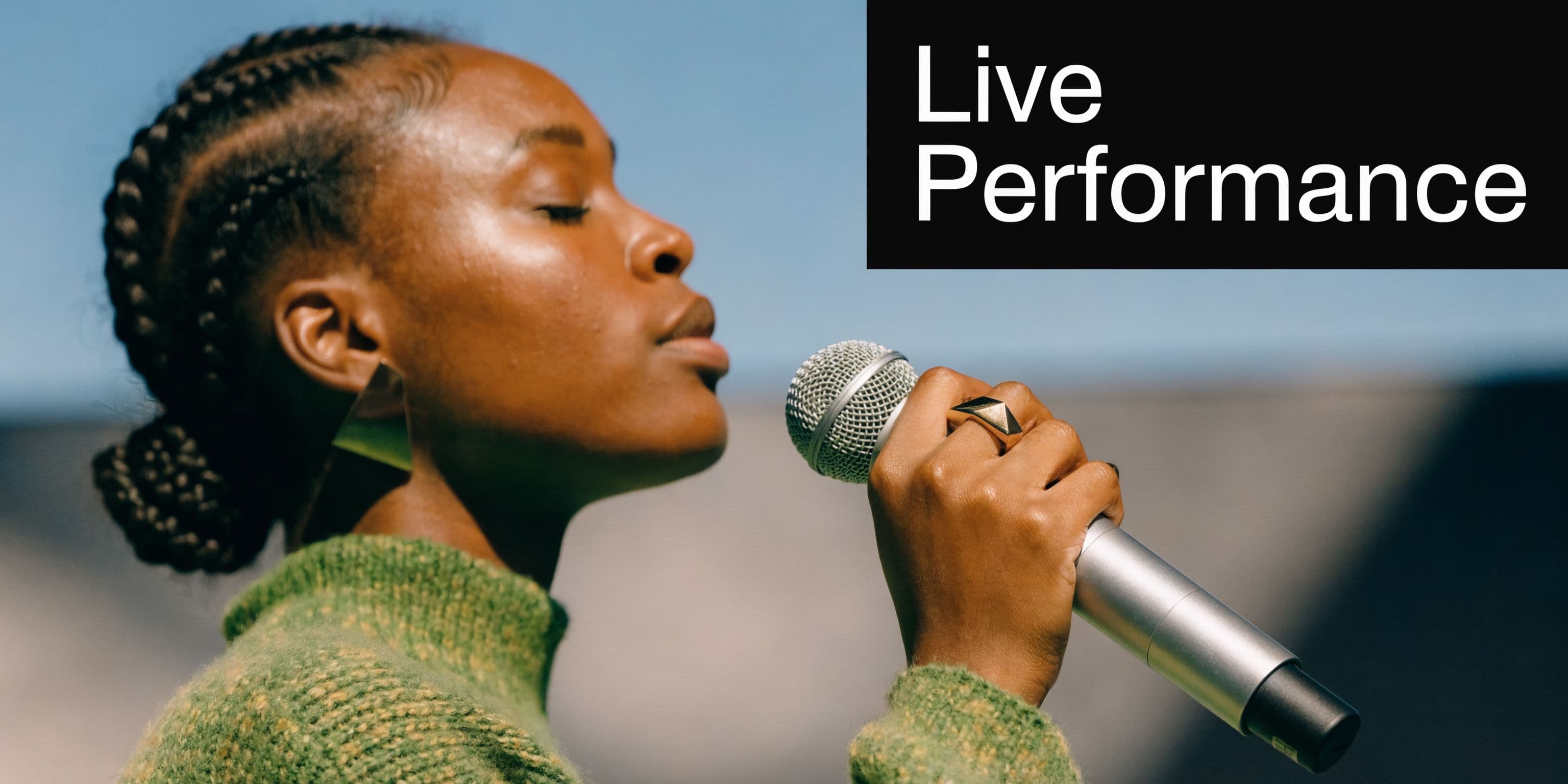
Some songs do not need a plot. They need presence. A performance-led video puts the artist at the center and lets charisma do the work.
This format is stronger than people think, especially for emerging acts. If fans are still deciding whether they connect with you, hiding behind too much concept can hurt. Let them see the face, body language, confidence, and imperfections that make the song feel human.
Bruno Mars built a lot of visual power on exactly that principle. So did Ariana Grande in videos where personality mattered as much as the set.
Make one location feel bigger than it is
A single room can carry the whole piece if you vary lens choice, framing, and motion. Shoot at least three versions of every section of the song: one locked-off take, one moving take, and one detail-heavy take for inserts. That gives the edit breathing room.
ShortGenius helps most on the coverage side. Camera movement presets can make one setup feel less static during planning, and fast resizing makes it easier to pull clean vertical selects after the main edit is done.
Use this structure:
- Wide master: Capture full body performance for safety.
- Medium energy take: Focus on torso, hands, and expression.
- Close emotional take: Save this for the bridge or final chorus.
Budget choices that matter
On a small budget, spend on lighting before you spend on props. Performance videos live or die by face, texture, and shape. A cheap room with strong contrast looks intentional. An expensive room lit flat looks unfinished.
For social cuts, isolate the strongest 15 to 30 second sections and build around one standout gesture or line delivery. Short-form thrives on recognizability. That could be a stare into lens, a dance phrase, or a hand-held walk toward camera.
A broader video trend supports this format too. Short-form content under 60 seconds is considered most effective by several marketers, according to this Technavio music and video market analysis. That is useful context when you plan the main video and the promo cuts together.
What works: commitment, rhythm, and clear visual identity.
What does not: one static take with no escalation.
3. Conceptual & Surreal Artistic Video
Conceptual videos are where artists try to look deep and often end up looking random. The difference between surreal and messy is control.
Björk and FKA twigs are useful references because their imagery feels strange but never accidental. Every object, texture, movement, and color belongs to the same world. That is the essential task here. Build a visual language, not just a pile of unusual shots.
Start with rules, not shots
Write three rules for the world before you brainstorm scenes. Examples:
- Color rule: Only metallics and skin tones.
- Movement rule: Everything floats, drifts, or repeats.
- Symbol rule: One recurring object appears in every section.
Once those rules exist, the concept becomes easier to scale. You can shoot practical footage, add generated elements, and still keep a coherent look.
For artists who want surreal motion without a huge VFX team, ShortGenius image-to-video tools are useful for turning still visual concepts into moving scenes you can test before committing to a full shoot.
Surreal visuals need one thing viewers can hold onto. A face, a symbol, or a repeated action. Without that anchor, people admire the frames and forget the song.
Practical execution and social adaptation
Low-budget surrealism often works best with simple materials: mirrors, projection, unusual wardrobe, smoke, harsh flash, or one highly specific location. Mid-budget concepts can add custom props, composited environments, and stylized post work. Bigger productions can build controlled art worlds from scratch.
For TikTok and Shorts, think in loops and interruptions. You need visual beats that stop thumbs quickly, especially in abstract work. A portal opening, an object transforming, an impossible body movement, or a hard color shift will travel better than slow atmosphere alone.
This style also lines up with where production is heading. Music video production is estimated at billions of dollars annually, with advanced techniques like CGI, motion graphics, VR, AR, and AI-assisted concept generation pushing the category forward, according to the same Technavio report already noted earlier.
What works: one dominant theme, disciplined color, recurring visual logic.
What does not: adding weird images just because they look cool in isolation.
4. Behind-the-Scenes & Documentary-Style Video
The night before release, the artist is still in the rehearsal room, phone at 12%, voice memo app open, half the band arguing about the outro. That is the raw material for this format. A strong documentary-style music video turns those real moments into story, not just proof that cameras were present.
This approach works best when the song has a visible life outside the final master. Writing scraps, studio takes, wardrobe prep, van rides, soundcheck, missed cues, post-show silence. Viewers stay with it because they feel access, but access alone is not enough. The footage still needs a point of view.
Artists like Clairo and Phoebe Bridgers have used homemade and process-heavy visuals with clear editorial control. The result feels personal because someone chose what to reveal, what to skip, and where the emotional turn happens.
Build the piece around one question
Good BTS videos answer one question by the end. Where did this song come from? What did making it cost emotionally? Who is the artist when nobody is performing for the lens?
Pick one. Trying to answer all three usually produces a loose montage.
A practical structure that holds up in the edit:
- Start with friction: a problem, a quiet moment, or an unfinished version of the song
- Show the work: rehearsals, rewrites, travel, conversations, setup
- Pay it off: the performance, release moment, or a small private resolution
That spine gives candid footage direction. It also helps you decide what not to include, which is usually the harder job.
Production toolkit by budget
Low budget works fine here if you shoot with intent. Use phones, one mirrorless camera, available light, and a few locked rules. Capture vertical and horizontal at the same time when possible. Record more natural sound than you think you need, because room tone, count-ins, and offhand comments often become the glue in the edit.
Mid-budget shoots benefit from one dedicated documentary shooter and one person tracking story beats. That second role matters. Someone needs to notice the useful material in real time, not after six hours of random coverage.
At a higher budget, add a field audio setup, interview lighting, release planning, and a proper logging workflow. The goal is still intimacy. Better gear should improve clarity, not make the artist self-conscious.
If you need to prototype narration, transitions, or alternate scene orders before locking the cut, ShortGenius text-to-video tools for rough storyboarding and scene testing can help you pressure-test the concept before you commit to a full edit.
Keep the rough edges that earn their place
Leave in camera shake if it adds urgency. Keep the pause before a take. Let ugly fluorescent backstage light stay ugly when that truth serves the song. Over-correcting documentary footage usually kills the reason to make this kind of video in the first place.
That said, rough footage still needs discipline. Sync drift, muddy audio, repetitive clips, and five versions of the same studio angle will drag the piece down fast. I cut documentary-style music videos the same way I cut branded docs. Every clip has to advance story, mood, or character.
Adapt it for TikTok and Shorts
This format travels well on short-form platforms because the footage already feels native. The mistake is posting a random excerpt and calling it strategy.
For TikTok, open with a revealing line or visual problem in the first second. A lyric note on the phone. The artist saying, "this chorus still is not right." A pre-show breathing moment. Add captions by default, and build one mini-arc per clip.
For YouTube Shorts, use clearer progression. Start with setup, move to process, end on payoff. A 20 to 35 second cut often outperforms a purely atmospheric fragment because viewers understand what changed.
Useful assets to pull from the same shoot:
- first-draft lyric clip
- studio argument or breakthrough moment
- pre-show ritual
- before-and-after arrangement comparison
- one candid line that frames the whole song
What works: chronological tension, real audio, selective polish, footage collected over time.
What does not: dumping rehearsal clips over the full track, overexplaining the meaning, or faking spontaneity with staged "candid" shots.
5. Animated & Motion Graphics Music Video
A song needs visuals, but the artist does not want another warehouse performance shoot. Animation solves that fast. It lets you build a repeatable visual identity, control every frame, and turn abstract lyrics into images that would be expensive or impossible to shoot.
That control cuts both ways. If the style shifts halfway through, the whole video feels cheaper than it is. I see this mistake all the time with low-budget animated videos. The team tests three looks, likes all of them, then forces them into one edit. Pick one visual system and protect it.
Build the visual system first
Before anyone starts animating, lock a one-page style guide. Keep it practical, not academic.
- Shape language: rounded, sharp, geometric, distorted, realistic
- Palette: three to five core colors, plus one accent
- Motion rules: smooth, jittery, mechanical, elastic, hand-drawn
- Texture: clean vector, collage, grain, paper cutout, glitch
- Text treatment: lyrics, titles, and captions should belong to the same world
Then make a short proof of concept. Eight to ten seconds around the chorus is enough. That test tells you whether the motion feels musical, whether the color holds up over time, and whether the workload matches your budget.
If you want to try different looks before committing, ShortGenius text-to-video tools can speed up style tests and rough scene planning. Teams producing promo cutdowns can also repurpose the same visual assets with ShortGenius AI UGC ad tools for vertical teasers and release-day social clips.
Best use cases, budget tiers, and platform cuts
Animation works best when the song needs world-building. Sci-fi, satire, fantasy, internal monologue, heavy symbolism, and hook-driven lyric videos all fit. It is also a strong choice for artists who want a visual brand without carrying the whole piece on camera.
Budget changes the format more than the idea.
- Low budget: kinetic typography, looped backgrounds, stock textures, simple icon motion
- Mid budget: designed environments, lyric interactions, animated transitions, limited character movement
- Higher budget: custom character animation, frame-by-frame sequences, advanced compositing, scene-specific art direction
For solo artists, hybrid usually wins. Use full animation for the chorus or signature moments. Fill the verses with motion graphics, lyric treatment, scene swaps, or still illustrations that move with intent. That keeps quality high without turning a three-minute song into an impossible production schedule.
Short-form cuts need their own plan. TikTok responds well to immediate visual payoff. Open with the strongest animated transformation, not your title card. YouTube Shorts usually performs better with a cleaner arc: hook, visual escalation, then one memorable final image. Vertical versions also need redesigned text placement and tighter framing. A widescreen lyric animation rarely survives a lazy crop.
What works: one clear visual language, beat-aware transitions, repeatable assets, and a chorus sequence people remember.
What does not: mixing unrelated styles, overanimating every second, or treating AI outputs as finished frames without cleanup.
6. User-Generated Content & Community Music Video
A community-driven music video is not just content. It is participation as distribution. Fans become contributors, then promoters, because they want to share the finished piece they helped build.
This can be a smart move for songs with a chant, a dance, a visual motif, or a strong emotional prompt. If the track invites people to react, confess, celebrate, or perform, community footage can turn that into momentum.
Set tighter rules than you think you need
Most user-generated campaigns fail in the submission stage, not the edit. People need clear instructions. Give them a format, a framing reference, a time window, and one prompt only.
For example:
- Framing: Vertical, chest-up, good light, plain background.
- Prompt: Show your version of the hook move.
- Timing: Submit the chorus only.
- Delivery: One clip per person, no filters.
ShortGenius can help on the assembly side, especially when you are sorting large batches of clips and need fast organization and trimming. If you are building a fan-powered campaign, ShortGenius AI UGC ad tools can also help repurpose participant footage into promo assets across platforms.
Why this format has real upside
Community formats fit the current platform environment well. Vertical video already dominates a large share of uploads, and fan participation makes the distribution loop stronger because every featured person has a reason to repost.
There is also a practical reason creators keep moving this way. The underserved opportunity in music video ideas is helping solo creators and small teams produce without crews. ShortGenius reports a user base of many creators and teams, and the same gap analysis notes that many indie musicians operate with very small budgets while AI workflows help them ideate, generate, and schedule faster, as discussed in this overview of music video ideas for studio shoots and creator workflows.
If you want good submissions, reduce creative freedom at the start. Structure first, personality second.
What works: one clear prompt, strong moderation, fast turnaround.
What does not: asking fans to “do anything inspired by the song” and hoping it cuts together.
7. Interactive & 360-Degree Music Video
Interactive videos sound flashy, but the best version is often simpler than artists expect. You do not need a full VR build to make a video feel participatory. Sometimes giving viewers alternate paths, clickable choices, or multiple perspective cuts is enough.
This format suits songs with layered narratives, alternate realities, or world-building. It also suits artists who already think in universes rather than singles.
Choose the right level of interactivity
There are really three practical versions:
- Light interactivity: YouTube cards, end screens, alternate cuts.
- Mid-level branching: Different narrative paths linked from one core release.
- Full immersion: 360-degree or headset-based experiences.
Björk’s experiments in immersive formats showed how strong the combination of music and spatial experience can be when the concept is built for it. But full immersion is expensive in planning even before cash enters the picture. Most artists should start with branching edits.
ShortGenius is useful here because you can cut each path as its own piece before linking them together. That lets you test whether each route is satisfying on its own.
What to watch out for
Interactivity creates friction. Every choice you ask a viewer to make interrupts passive watching. That means the reward has to be obvious. New information, a new angle, a hidden scene, or a different ending.
This area also connects to broader demand for advanced visual formats. Nearly half of global internet users watch short-form videos weekly, and this type of video has a very high weekly viewing rate, according to the Technavio market analysis cited earlier. That does not mean 360 is mainstream. It means even complex formats should still produce simple, short clips that travel on standard feeds.
What works: clear stakes for each viewer choice, easy navigation, self-contained branches.
What does not: making users work hard just to see material that could have been in a normal cut.
8. Location & Travel-Based Music Video
Some songs need movement through real space. A travel-based video gives scale, texture, and progression without forcing a heavy plot. The artist moves through cities, roads, coastlines, rooftops, stations, deserts, alleys, or interiors that each add a new emotional note.
The danger is turning the whole thing into tourism footage with a song on top. Great location videos still need a reason for each place to exist.
Scout for contrast, not just beauty
Do not just collect pretty backdrops. Build a sequence of environments that changes the feeling of the song.
A useful mix might look like this:
- Start contained: Small room, tunnel, stairwell.
- Open up: Street, rooftop, bridge, field.
- Land the finale: One hero location that feels earned.
Coldplay’s more journey-oriented visuals work because the locations feel like stages in an emotional movement, not random inserts. The same principle applies even if you are shooting in your own neighborhood.
Budget control and edit strategy
Travel shoots can get expensive through logistics, not gear. Parking, permits, transit, food, time lost moving between setups. The fix is aggressive route planning. Group nearby locations, schedule around light, and know exactly which shot you need at each stop.
On a low budget, one strong city block plus a second contrasting environment can be enough. Add wardrobe variation and time-of-day changes to expand the perceived scale.
For social versions, cut by place. Let each location produce its own mini-edit with a different line of the song. That gives you multiple assets from one shoot. ShortGenius color tools help most here because travel footage often comes back inconsistent. The job is not making everything identical. It is making the shifts feel intentional.
What works: contrasting locations tied to the song’s progression, disciplined route planning, a final hero frame.
What does not: driving around all day collecting random b-roll with no emotional map.
9. Trending Audio & Dance Challenge Music Video
If you want participation, make the action easier than people think. Dance challenge videos fail when artists choreograph for dancers instead of for audiences.
The most effective challenge-based music video ideas build one signature move, one lyric cue, and one clip length that is easy to copy. Simplicity wins. Soulja Boy’s “Crank That” showed how a dance video can drive massive repeat viewing and chart success, with the song’s dance video reaching 1.5 billion YouTube views and the track topping Billboard for 14 weeks, according to the Boundless history cited earlier.
Design for imitation, not admiration
Build the challenge around one of these structures:
- One move plus attitude: Best for swagger tracks.
- Three-step sequence: Best for catchy choruses.
- Gesture linked to lyric: Best for phrase-heavy hooks.
Then front-load clarity. Start the challenge clip with the easiest version of the move before you show polished performers doing it harder or faster.
ShortGenius helps by making quick recuts easy. You can test different hook lengths, text overlays, and tutorial opens without rebuilding the entire edit.
If viewers need to rewind twice to learn the move, participation drops. The move should be readable on mute and learnable in one watch.
Launch strategy that feels native
This format lives or dies in the first batch of uploads. Seed the challenge with creators whose audiences already mimic trends. Give them room to personalize, but keep the core move intact.
Psy’s “Gangnam Style” became the first YouTube video to hit 1 billion views in 159 days, also noted in the Boundless history, because the dance was instantly legible and absurd enough to invite imitation. That is the standard. Not “complicated,” not “impressive.” Legible.
What works: repeatable choreography, visible cue points, many lightweight recuts.
What does not: treating the challenge as an afterthought once the full music video is already finished.
10. Mashup & Reinterpretation Music Video
Mashup videos work when the contrast reveals something new about the song. A genre switch, era shift, visual reference blend, or cultural remix can make a familiar track feel freshly authored.
Most bad mashups fail for one reason. They stack references instead of translating them. If you borrow from disco, westerns, anime, noir, church performance, or vintage TV, those references need to be rebuilt around your song’s point of view.
Find the unifying principle first
Before you combine styles, answer one question. What ties these influences together?
Good answers include:
- Shared emotion: Two worlds express the same heartbreak or confidence.
- Shared rhythm: Different styles hit the beat in compatible ways.
- Shared visual motif: Costumes, framing, or set pieces bridge the gap.
Mark Ronson’s broader collaborative style is useful as a reference because the blend usually feels intentional, not random. Postmodern Jukebox videos also show how reinterpretation can become a brand if the treatment is clear enough.
Here is a strong example of reinterpretation energy in performance and presentation:
Legal and practical reality
This is the format where enthusiasm can outrun clearance. If your mashup uses recognizable third-party audio, footage, or direct visual lifts, sort permissions early. Inspiration is fine. Unlicensed use is not a strategy.
On the edit side, ShortGenius can help you test multiple style combinations before you commit. Try one version that leans comedic, one that leans cinematic, one that leans nostalgic. Then keep the one that makes the song feel bigger, not just stranger.
The bigger business case for strong video experimentation is obvious. The music and video market is projected to grow significantly over the next few years, according to Technavio’s market projection linked earlier. More video means more sameness. Reinterpretation is one way to avoid blending into the feed.
What works: a clear throughline, disciplined borrowing, proper credit and licensing.
What does not: reference overload with no single visual thesis.
10-Point Music Video Ideas Comparison
| Format / Style | Implementation Complexity 🔄 | Resource Requirements ⚡ | Expected Outcomes 📊⭐ | Ideal Use Cases 💡 |
|---|---|---|---|---|
| Narrative Story-Driven Music Video | High: scripting, multiple scenes, continuity | High: cast, sets/locations, larger crew, longer timeline | Strong emotional engagement and rewatchability; higher share potential ⭐ | Indie artists, DTC brands, long-form social storytelling |
| Performance & Artist-Focused Music Video | Medium: choreography and dynamic shooting | Moderate: studio or stage, lighting, camera crew; faster turnaround ⚡ | Direct artist‑fan connection; many repurposeable short clips 📊 | Solo musicians, creators, coaches showcasing skill |
| Conceptual & Surreal Artistic Video | Medium–High: clear creative direction and VFX | Variable: VFX/creative team or AI tools; moderate to high cost | Distinctive visual identity; memorable and discussion‑worthy ⭐ | Artists building unique identity, creative agencies, avant‑garde brands |
| Behind-the-Scenes & Documentary-Style Video | Low: candid capture and straightforward editing 🔄 | Low: smartphones or minimal gear; low budget and quick production ⚡ | High authenticity and trust; strong parasocial engagement 📊 | Independent creators, authentic brand builders, low‑budget artists |
| Animated & Motion Graphics Music Video | High: animation pipelines and timing to music | High (traditional) but scalable with AI: animators, software, time | Long‑lasting brand/IP potential; consistent visual style and cross‑platform appeal ⭐ | IP-focused artists, educators, brands wanting mascots or scalable visuals |
| User-Generated Content & Community Music Video | Medium: coordination, submission guidelines, curation | Low production cost but high curation & promotion effort | Massive viral and engagement potential; strong community loyalty 📊 | Artists with active fanbases, community-driven brands, social teams |
| Interactive & 360-Degree Music Video | Very High: branching narratives, UX planning, testing 🔄 | Very high: VR/360 equipment, programming, extended editing | Immersive, highly memorable experiences with extended watch time ⭐ | Tech-forward artists, luxury brands, agencies showcasing innovation |
| Location & Travel-Based Music Video | High: logistics, permits, weather-dependent scheduling | High: travel budget, location scouts, drone/cinematography | Visually stunning content; strong shareability and partnership potential 📊 | Travel/tourism brands, DTC adventure brands, travel content creators |
| Trending Audio & Dance Challenge Music Video | Low–Medium: choreography design and seeding strategy | Low: simple shoots; investment in creator seeding and promotion ⚡ | Rapid, exponential reach when timed well; short trend lifespan 📊 | Pop/hip‑hop artists, social media marketing teams, influencers |
| Mashup & Reinterpretation Music Video | Medium–High: cohesive creative direction and editing | Moderate: licensing/legal work, editing, cross‑style production | Novelty-driven reach across audiences; discussion and renewed relevance ⭐ | Artists showing versatility, agencies, educators blending genres |
Turn Your Vision into a Viral Video Today
The best music video ideas are rarely the most complicated ones. They are the ones you can execute well.
That sounds obvious, but it is where most projects break. Artists chase a concept that belongs to a bigger team, a longer schedule, or a different skill set. Then the shoot drifts, the edit gets patched together, and the final video feels like a compromise. A smaller idea, produced with conviction, usually lands harder.
That is especially true now because the platforms reward clarity and volume as much as polish. Businesses are investing heavily in video, with many using video marketing and reporting strong ROI, according to Technavio’s analysis already cited earlier. That matters for music too. Audiences are trained to consume songs through visuals, clips, fragments, teasers, and remixes. One official video is no longer the whole campaign. It is the center of a system.
So choose a concept with downstream potential.
A narrative video can become character teasers, ending explainers, and scene-based vertical clips. A performance video can generate live-feeling hooks, rehearsal edits, and stripped-down alternate versions. A surreal concept can spin off looping visuals, cover animations, and artwork variations. Community videos can fuel follow-up compilations and fan spotlights. A travel video can become a location-based mini-series. A challenge-based video can become a template for audience participation.
That is where tools matter. A practical platform should not just help you make one video. It should help you turn one idea into a usable content package. Script drafts, visual tests, scene swaps, captions, voiceovers, resizing, alternate cuts, scheduled distribution. Those are not extras anymore. They are part of the production plan.
The workflow shift is already underway. AI use in video creation and editing has grown fast, and marketers increasingly rely on it to reduce production time and cost, as noted in the Technavio and Wyzowl data referenced earlier. The value for artists is straightforward. You can test ideas sooner, throw away weaker versions earlier, and spend your shoot time on the pieces that deserve a camera.
If you are a solo creator, that matters even more. You may not have a producer, a full crew, a motion designer, and a social editor sitting nearby. You still need content that can live on YouTube, TikTok, Instagram, and whatever format comes next. That is why your concept should be designed for adaptability from the beginning.
A good production question is this: can this idea survive three versions?
- The full version for YouTube.
- The vertical cut for Shorts, TikTok, and Reels.
- The stripped-down promo version that sells the hook in seconds.
If the answer is yes, you are building something useful, not just something pretty.
Start with the song’s strongest trait. If it tells a story, go narrative. If it sells personality, go performance. If it creates a world, go conceptual or animated. If the fanbase wants in, go community or challenge. If the record thrives on movement, use travel. If the song gains power through contrast, reinterpret it.
Then make the first ugly draft quickly. Not the final. The draft. That is where momentum lives. Once you can see the video, even roughly, the right decisions get easier.
Pick one of the ideas above. Strip it to its strongest version. Build the shoot around what the song already does well. Then use ShortGenius to script, visualize, assemble, recut, and schedule until the idea stops living in your head and starts living on screen.
ShortGenius makes that process much easier. If you want one workspace for scripting, image generation, video assembly, natural voiceovers, scene swaps, resizing, captions, brand kits, and publishing across TikTok, YouTube, Instagram, Facebook, and X, try ShortGenius (AI Video / AI Ad Generator). It is built for creators, teams, and agencies that need to turn strong ideas into finished videos fast.