
8 Unforgettable Examples of Infomercial Wins

Explore 8 timeless examples of infomercial marketing, from classic hits to modern viral sensations. Learn what made them work and how to apply their lessons.
Infomercials. The word alone might conjure images of late-night TV, over-the-top pitchmen, and miraculous gadgets. But the classic infomercial is more than just a nostalgic trope; it is a masterclass in direct-response marketing that has evolved dramatically for the digital era. The core principles of creating an undeniable hook, demonstrating a clear problem-solution, and building an irresistible offer are more relevant than ever.
Today's most successful brands, from viral startups to household names, are using these very tactics to create compelling video content for platforms like TikTok, YouTube, and Instagram. This article breaks down eight legendary examples of infomercial success, including both classic hits and modern disruptors.
For each example, we'll dissect the strategic elements that made it work, analyze its persuasive power, and provide actionable takeaways you can apply to your own video marketing. We will even show you how AI video tools can make it faster and easier to recreate these winning formulas, helping you turn your product into the next must-have item. Prepare to learn the repeatable methods behind iconic campaigns from the ShamWow to Dollar Shave Club.
1. ShamWow: The Viral Infomercial Success Story
The ShamWow infomercial, featuring the energetic pitchman Vince Offer, is a prime example of how a direct, high-energy presentation can create a viral sensation and drive massive sales. Debuting in 2008, it wasn’t just an advertisement; it became a cultural touchstone. The core of its success was its simple, powerful demonstration of a super-absorbent chamois cloth tackling spills with incredible efficiency.
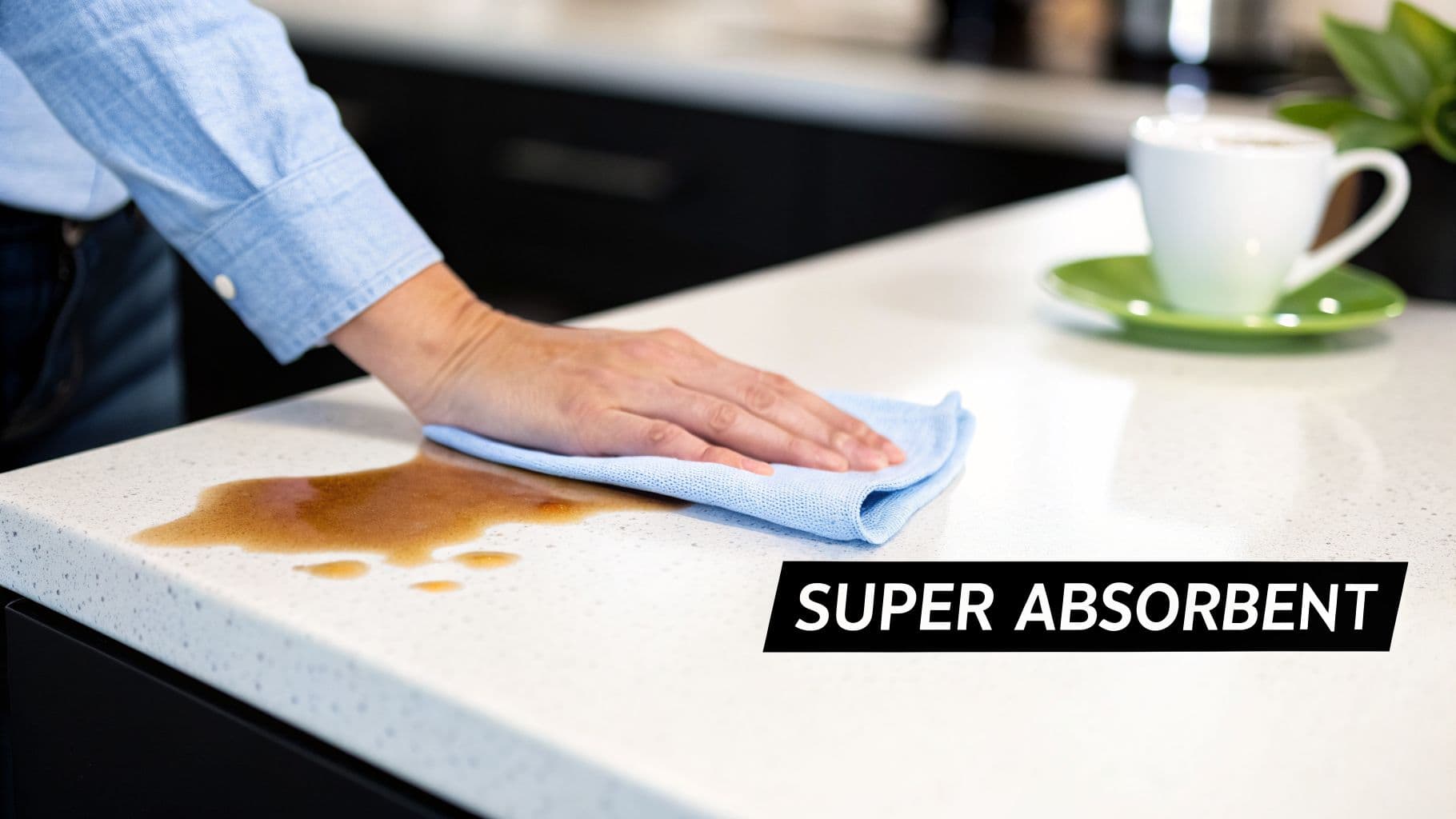
The ad's structure is a masterclass in direct-response marketing. It presents a common problem (spills), introduces a superior solution (ShamWow), and proves its value through rapid-fire demos. This is one of the classic examples of infomercial formats that continues to work because it directly addresses viewer skepticism with visual proof.
Strategic Breakdown
The ShamWow infomercial’s effectiveness wasn't accidental. It was built on several key persuasion tactics that worked together to create an irresistible pitch.
- The Hook: Vince Offer’s opening line, "You'll be saying 'wow' every time," grabs attention immediately. His confident, almost abrasive, delivery was unforgettable.
- The Demo: The ad is packed with quick-cut demonstrations showing the ShamWow absorbing cola, wine, and other liquids from carpet and countertops. The visual of wringing out the cloth to show the absorbed liquid was the money shot.
- The Offer: The classic "But wait, there's more!" structure was used to stack value. The deal included multiple ShamWows for a low price, creating a sense of urgency and high perceived value.
- Call to Action (CTA): A clear phone number and website were displayed prominently, making it easy for motivated viewers to place an order immediately.
Key Insight: The ShamWow’s success demonstrates that a charismatic (even polarizing) personality combined with relentless, repetitive demonstrations can be more powerful than a polished, high-budget production.
Replicating the ShamWow Method
This approach is perfect for products with a clear, demonstrable benefit. Use it when you can visually prove your product is superior to the alternative.
Actionable Tips:
- Develop a Strong On-Screen Persona: Whether it's you or an actor, create a memorable character. High energy and strong conviction are key.
- Focus on Rapid-Fire Demos: Don’t just tell people your product works; show them. Film multiple, fast-paced examples of the product solving a problem.
- Build an Unbeatable Offer: Structure your deal to feel like a bargain. Use bundling (e.g., "buy one, get one") to increase the perceived value.
- Use Repetitive Catchphrases: Create a memorable line that viewers will associate with your product, just like "You'll be saying 'wow' every time."
2. Snuggie: Community and Lifestyle Positioning
The Snuggie infomercial, debuting in 2008, masterfully transformed a simple blanket with sleeves into a cultural phenomenon. Instead of focusing solely on product features, it positioned the Snuggie as an essential part of a comfortable, social lifestyle. The ad showcased people from all walks of life-families at sporting events, friends on the couch, and individuals reading-all happily using their Snuggies.

Its brilliance lay in selling an experience of warmth, community, and fun. The campaign resonated so well that it created a post-ironic appeal, leading to pub crawls, celebrity appearances, and branded versions for niches like NFL teams. This is one of the best examples of infomercial strategy because it proves that building a brand around a lifestyle can be far more powerful than just selling a product.
Strategic Breakdown
The Snuggie campaign’s success was built on creating a sense of shared identity and solving a universal, albeit minor, annoyance. It didn't invent a need; it gave a name and a solution to a feeling everyone recognized.
- The Hook: The ad opened with relatable frustrations-fumbling with a blanket while trying to use a remote or answer the phone. This immediately created a "that's me!" moment for viewers.
- The Demo: Rather than technical specs, the demonstrations were purely lifestyle-focused. It showed groups of people enjoying activities together, all made better and more comfortable by the Snuggie.
- The Offer: The classic "buy one, get one free" deal made it an easy, low-risk purchase. Including a "free book light" further sweetened the pot and added practical value.
- Call to Action (CTA): A clear phone number and website were constantly on-screen, encouraging impulse buys from viewers who felt connected to the lifestyle being presented.
Key Insight: The Snuggie proved that you don't need a hard-sell approach if you can successfully position your product as a vehicle for a desirable emotion or lifestyle, like comfort and togetherness.
Replicating the Snuggie Method
This approach is ideal for products that enhance everyday life or have a strong social component. Use it to build a community and create emotional connections with your audience.
Actionable Tips:
- Show, Don't Tell the Lifestyle: Feature diverse groups of people using your product in aspirational but relatable real-world scenarios.
- Focus on Shared Experiences: Build your narrative around universal feelings or common problems that your product solves, creating an instant connection.
- Create an Inclusive Brand: Showcase a wide range of demographics to broaden your product's appeal and make everyone feel like they can be part of the "club."
- Encourage User-Generated Content: Create a product and message that people want to share, turning customers into brand ambassadors, as seen with the Snuggie's organic social media explosion.
3. Flex Seal: Modern Infomercial Mastery and Social Media Integration
The Flex Seal family of products, championed by the unflappable pitchman Phil Swift, represents the evolution of the classic infomercial into a multi-platform content machine. Launching in 2011, the campaign took the traditional direct-response format and amplified it with a massive digital footprint. Its core strategy is built on dramatic, visually stunning demonstrations that are as effective on a 30-minute TV spot as they are in a 15-second TikTok clip.
The campaign’s genius lies in its extreme problem-solution format. Showing Phil Swift sawing a boat in half and then repairing it with Flex Tape is not just an ad; it's shareable entertainment. This makes it one of the most powerful examples of infomercial strategies in the modern era, proving that a TV-first approach can fuel a thriving social media ecosystem.
Strategic Breakdown
Flex Seal’s market dominance was achieved through a calculated blend of memorable branding and over-the-top demonstrations that are impossible to ignore.
- The Hook: Phil Swift’s calm, dad-like demeanor contrasts sharply with the extreme situations he creates. Lines like, "To show you the power of Flex Tape, I sawed this boat in half!" are instantly memorable and meme-worthy.
- The Demo: The demonstrations are the star of the show. From sealing massive leaks in water tanks to building a functioning boat out of screen mesh and Flex Seal, the visual proof is undeniable and built for viral sharing.
- The Offer: While the TV spots use classic value-stacking offers, the brand’s broader strategy focuses on retail availability. The goal is to make you remember the name "Flex Seal" when you see it at the hardware store.
- Call to Action (CTA): The CTA has evolved from a simple phone number to a multi-channel push, directing viewers to their website, YouTube channel, and local retail partners.
Key Insight: Extreme, visually spectacular demonstrations that border on absurdity can create powerful brand recall and generate organic social media buzz far beyond the initial ad spend.
Replicating the Flex Seal Method
This strategy is ideal for products that solve a physical problem in a visually impressive way. Use it when your product's results are so dramatic they need to be seen to be believed.
Actionable Tips:
- Engineer "Wow" Moment Demos: Brainstorm extreme, almost unbelievable scenarios where your product can save the day. Think bigger than a simple countertop spill.
- Develop a Consistent Brand Personality: Phil Swift is Flex Seal. A consistent, recognizable face builds trust and a dedicated following.
- Repurpose Content for Social Media: Edit your long-form infomercial into short, high-impact clips for TikTok, Instagram Reels, and YouTube Shorts. The most dramatic moments work best. For creators looking to scale this type of content, exploring AI-powered UGC ad generation can help produce platform-specific variations quickly.
- Embrace the Meme: Don't be afraid if your content becomes a meme. Flex Seal leaned into its "I sawed this boat in half" fame, which amplified its reach exponentially.
4. Thighmaster: Celebrity Endorsement and Fitness Positioning
The Thighmaster infomercial, featuring actress Suzanne Somers, established the blueprint for celebrity-driven direct-response advertising. Launched in the early 1990s, its success proved that a trusted and aspirational personality could lend immense credibility to a product, turning a simple spring-loaded device into a fitness phenomenon. The campaign’s power came from its perfect pairing of celebrity appeal with an easy-to-understand fitness solution.
This campaign is one of the most referenced examples of infomercial history because it shifted the focus from a hard-sell pitchman to a relatable, aspirational figure. It demonstrated that viewers would respond to a friendly, encouraging personality who seemed to genuinely use and believe in the product, making the purchase feel more like taking advice than being sold to.
Strategic Breakdown
The Thighmaster's phenomenal sales, exceeding $100 million, were a direct result of its strategic use of celebrity influence and aspirational marketing. The campaign was meticulously designed to build trust and create desire.
- The Hook: Suzanne Somers, a well-known TV star, immediately provided credibility and captured attention. Her presence made viewers stop and listen, associating the product with Hollywood glamour and fitness.
- The Demo: The demonstrations were intentionally simple. Somers showed how to use the Thighmaster while watching TV or relaxing, positioning it as an effortless addition to any daily routine, not a grueling workout.
- The Offer: The product was priced accessibly, and the call to action often emphasized the ease of ordering. The value wasn't just in the device but in the promise of achieving a body like a celebrity’s with minimal effort.
- Call to Action (CTA): A clear phone number and ordering information were consistently displayed, encouraging impulse buys from viewers who felt inspired by Somers’s presentation.
Key Insight: Associating a product with a trusted celebrity creates an instant "halo effect," transferring the personality’s credibility and appeal directly onto the product, often making objective performance secondary to the aspirational promise.
Replicating the Thighmaster Method
This approach is ideal for lifestyle, beauty, and fitness products where aspirational results are a key selling point. Use it when a well-aligned personality can help build trust and embody the transformation you're promising.
Actionable Tips:
- Find the Right Influencer or Celebrity: Partner with someone whose personal brand aligns with your product. Authenticity is more important than sheer follower count.
- Focus on Aspirational Storytelling: Frame the product not just as a tool, but as a pathway to a more desirable lifestyle, as embodied by your spokesperson.
- Keep Demonstrations Simple and Relatable: Show the product being used in everyday situations to lower the barrier to entry and make it seem easy to adopt.
- Promote the Personality: Your marketing should feature the celebrity prominently. They are not just endorsing the product; they are a core part of the brand story.
5. OxiClean: Educational Infomercial and Viral Momentum
The OxiClean infomercial campaign, famously led by the booming voice and infectious enthusiasm of pitchman Billy Mays, demonstrated how educating an audience can be just as powerful as a hard sell. Starting in the 2000s, these ads did more than just show a product; they taught viewers the science behind stain removal, building immense trust and credibility. The combination of dramatic demonstrations and Mays's signature style made it one of the most memorable examples of infomercial marketing ever.

The ad's core genius was its educational approach. Instead of simply saying "it works," Mays would explain how the oxygen-based cleaner broke down stains. This positioned the product not as magic, but as a scientifically superior solution, empowering the consumer with knowledge and confidence in their purchase.
Strategic Breakdown
OxiClean’s long-running success was rooted in a specific formula that combined personality, proof, and a clear value proposition.
- The Hook: Billy Mays's loud, direct-to-camera greeting, "Hi, Billy Mays here for OxiClean!", was an unmistakable and attention-grabbing opener. His high-energy delivery was impossible to ignore.
- The Demo: The infomercial was filled with dramatic before-and-after shots. Stains from wine, grass, and dirt would vanish in clear containers of OxiClean solution, providing undeniable visual evidence of its power.
- The Offer: The classic value-stack was a key component. The deal often included a large tub of OxiClean plus bonus items for a special price, all reinforced with the urgency of a limited-time phone-in offer.
- Call to Action (CTA): A simple phone number and website were constantly on screen, paired with Mays’s enthusiastic commands to "Call now!" making the next step for interested viewers clear and immediate.
Key Insight: Educating your audience about the "why" behind your product builds a deeper level of trust than a simple demonstration. When viewers understand the mechanism, they are more likely to believe the results.
Replicating the OxiClean Method
This educational approach is ideal for products with a unique mechanism or scientific backing. Use it when you can explain why your product is better, not just that it is.
Actionable Tips:
- Explain the Science Simply: Break down how your product works into easy-to-understand terms. Use analogies or simple graphics to explain the core concept.
- Use Dramatic Before-and-Afters: The visual transformation is key. Show the problem in its worst state and then reveal the perfect solution your product provides.
- Find a Passionate Spokesperson: Your on-screen talent must genuinely believe in the product. Their authentic enthusiasm is what sells the message and builds viewer trust.
- Create Shareable Moments: Mays’s distinct style became a meme. Think about creating a unique catchphrase, gesture, or visual that is memorable and easy for people to share online.
6. Magic Bullet: Lifestyle Integration and Recipe Content
The Magic Bullet infomercial fundamentally shifted the focus from a hard-sell product demonstration to an appealing lifestyle narrative. Launched in the early 2000s, it presented its compact blender not just as a kitchen gadget, but as the key to a healthier, faster, and more enjoyable way of life. Instead of just listing features, the ad showed charismatic hosts effortlessly making smoothies, sauces, and party dips in seconds.
This approach masterfully integrated the product into aspirational scenarios. The infomercial unfolded like a casual get-together with friends, making the sales pitch feel more like a friendly recommendation. This narrative-driven format is one of the most effective examples of infomercial strategies because it sells a desired outcome, not just a product.
Strategic Breakdown
The Magic Bullet's long-running success was built on making the product feel indispensable to a modern, health-conscious lifestyle. It achieved this through a clever combination of demonstration and storytelling.
- The Hook: The ad opens with relatable kitchen frustrations like bulky blenders and tedious food prep, immediately establishing a problem the audience recognizes.
- The Demo: Unlike a typical demo, the Magic Bullet was shown creating a wide variety of recipes, from breakfast smoothies to party appetizers. This showcased its versatility and positioned it as an all-day solution.
- The Offer: The value proposition was built on replacing multiple bulky appliances (blender, food processor, coffee grinder) with one compact, affordable device. Bundles with extra cups and blades made the deal seem too good to pass up.
- Call to Action (CTA): The hosts directly encouraged viewers to call or visit the website, reinforcing the convenience and immediate lifestyle upgrade the product offered.
Key Insight: Selling a lifestyle is more powerful than selling a product. By associating the Magic Bullet with health, convenience, and social fun, the infomercial created an emotional connection that technical specs alone could never achieve.
Replicating the Magic Bullet Method
This model is ideal for products that can be integrated into daily routines or hobbies, such as kitchen gadgets, fitness equipment, or beauty tools.
Actionable Tips:
- Build a Narrative: Don't just show what your product does; show how it improves someone’s life. Create a story around its use.
- Focus on Recipe/How-To Content: Develop content that naturally showcases your product in action. This provides value to the viewer beyond the sales pitch.
- Showcase Versatility: Demonstrate multiple use cases to broaden your product’s appeal and justify its value.
- Emphasize Transformation: Visually show the "before" (raw ingredients, complex prep) and the "after" (a delicious meal, a finished project) to highlight the end benefit.
7. Beachbody/P90X: Transformation Narrative and Community Building
The P90X infomercial, featuring charismatic trainer Tony Horton, shifted the fitness advertising model from quick fixes to long-term transformation. Instead of relying solely on a high-energy pitch, Beachbody's campaign centered on authentic, dramatic "before and after" stories from everyday people. This approach proved that showing real, attainable results could be more powerful than celebrity endorsements alone.
The infomercial's structure is a compelling journey. It presents the common frustration of failed fitness goals, introduces P90X as a structured 90-day system, and validates its effectiveness with a constant stream of user testimonials. This is one of the most powerful examples of infomercial strategies because it builds an emotional connection and a sense of community around a shared goal.
Strategic Breakdown
The P90X campaign's success was built on its masterful use of social proof and aspirational storytelling, making viewers believe they too could achieve incredible results.
- The Hook: The infomercial opens with relatable people discussing their fitness struggles, immediately connecting with the viewer's own pain points. This is followed by incredible "after" shots that grab attention.
- The Demo: The "demo" wasn't just about exercises; it was the transformation itself. The program meticulously documented progress through photos and videos, showing undeniable physical changes over the 90-day period.
- The Offer: The offer framed P90X not as a product, but as a complete system including workout DVDs, a nutrition plan, and a fitness guide. This value-stacking made the price seem reasonable for a life-changing program.
- Call to Action (CTA): The CTA invited viewers to join a movement of success stories. The clear ordering information was paired with encouraging messages, prompting viewers to commit to their own transformation.
Key Insight: P90X demonstrated that authentic, peer-driven testimonials are more persuasive than polished expert claims. Building a community around shared success creates long-term brand loyalty and advocacy.
Replicating the P90X Method
This approach is ideal for products or services that deliver measurable, visible results over time, such as fitness, education, or skill development. You can easily create compelling testimonial videos with an AI video tool. For more information, explore how to create content with a text to video model.
Actionable Tips:
- Feature Real Customer Journeys: Don't just show the final result. Document the entire process, including the struggles and milestones, to build authenticity.
- Showcase Before-and-After Evidence: Use clear, compelling visuals (photos, videos, data) to prove your product's effectiveness.
- Build a Community Narrative: Frame your marketing around joining a group of successful peers. Use language like "Join thousands of others who..."
- Combine Expert and Peer Credibility: Use an expert (like Tony Horton) to explain the "how" and "why," but let real users provide the emotional proof that it works.
8. Dollar Shave Club: Infomercial Disruption in the Digital Age
Dollar Shave Club’s 2012 launch video completely rewrote the rules for infomercials in the internet age. Rather than a hard-sell, high-energy pitch, co-founder Mike Dubin delivered a deadpan, hilarious, and authentic monologue that resonated with a new generation of consumers. This wasn't just an ad; it was a viral entertainment piece that established an entire brand identity in 90 seconds.
The video’s success proved that for a digital audience, relatability and humor can be far more effective than a polished production. It tackled a common frustration (overpriced razors) with a simple, direct solution, making it one of the most powerful modern examples of infomercial strategies. The campaign became legendary, catapulting a startup to a $1 billion acquisition by Unilever.
Strategic Breakdown
Dollar Shave Club’s viral success was rooted in its deliberate rejection of traditional advertising norms. It replaced the "pitchman" with a relatable founder and the hard sell with authentic, irreverent humor.
- The Hook: The video opens with Mike Dubin’s iconic line, "Hi, I'm Mike, founder of DollarShaveClub.com. What is Dollar Shave Club? Well, for a dollar a month, we send high-quality razors right to your door." It's direct, simple, and immediately states the value proposition.
- The Demo: Instead of showing the razor shaving, the "demo" was Dubin walking through a warehouse, interacting with absurd characters (like a man in a bear costume), and confidently explaining why the big brands are a rip-off. The demo was about the business model, not just the product.
- The Offer: The offer was the brand's name and its core promise: "A dollar a month." This simple, unbeatable value proposition was the central message, reinforced with the tagline, "Our blades are f***ing great."
- Call to Action (CTA): The CTA was seamlessly integrated into the video's narrative, directing viewers to the website. The viral nature of the video itself acted as a massive, organic CTA, driving millions to the site.
Key Insight: Authenticity can be your most powerful marketing tool. Dollar Shave Club showed that a low-budget video with a compelling personality and a clear, simple message can outperform multimillion-dollar ad campaigns.
Replicating the Dollar Shave Club Method
This approach is ideal for challenger brands aiming to disrupt a market with a simple, strong value proposition. It works when your brand's personality is a key differentiator.
Actionable Tips:
- Lead with Your Founder: Put a real, relatable person at the forefront. Authenticity builds trust faster than a hired actor.
- Use Humor and Irreverence: Don't be afraid to break advertising conventions. A funny, self-aware tone can make your message memorable and shareable. Creating this type of content is easier than ever with an AI ad generator that can help script and visualize your ideas.
- Focus on One Simple Message: Boil your value proposition down to its simplest form. Dollar Shave Club’s was "great razors for a few bucks a month."
- Embrace "Good Enough" Production: The video looked professional but not slick. This raw, authentic feel made it more credible for a YouTube audience.
Infomercial Strategy Comparison: 8 Iconic Examples
| Campaign | Implementation Complexity 🔄 | Resource Requirements ⚡ | Expected Outcomes 📊 | Ideal Use Cases 💡 | Key Advantages ⭐ |
|---|---|---|---|---|---|
| ShamWow: The Viral Infomercial Success Story | Medium — fast-paced staging and rapid editing (🔄🔄) | Moderate — on-screen talent, demo props, skilled editor | Strong short-term sales lift and viral reach (e.g., ~$100M) | Product demos needing visual proof and high energy | High engagement; memorable brand voice; clear efficacy proof (⭐⭐⭐) |
| Snuggie: Community and Lifestyle Positioning | Low–Medium — simple lifestyle shoots and narrative scenes (🔄🔄) | Moderate — diverse cast, locations, lifestyle props | Broad demographic appeal; large retail sales ($500M+) | Lifestyle products aiming for emotional connection | Builds emotional resonance; scalable licensing and cross-sell (⭐⭐⭐⭐) |
| Flex Seal: Modern Infomercial Mastery and Social Media Integration | High — stunt demos, multi-platform edits, safety prep (🔄🔄🔄) | High — production, testing setups, social optimization | Very high reach and sustained sales; strong social virality (billions) | Problem-solution products with dramatic visual fixes | Highly shareable demos; strong brand personality and cross-platform reach (⭐⭐⭐⭐) |
| Thighmaster: Celebrity Endorsement and Fitness Positioning | Low — simple product demos driven by celebrity presence (🔄🔄) | Moderate — celebrity/influencer fees, basic set | Rapid sales growth and quick credibility gain (~$100M+) | Fitness/beauty items benefiting from trusted personalities | Instant credibility via celebrity; easy-to-understand mechanics (⭐⭐⭐) |
| OxiClean: Educational Infomercial and Viral Momentum | Medium — fast-paced demos plus educational explanation (🔄🔄) | Moderate — demonstrator, lab-style tests, props | High sales and trust-building; memorable presenter-led virality ($1B+) | Technical or science-backed cleaning/solution products | Builds consumer trust through education; repeatable demo format (⭐⭐⭐⭐) |
| Magic Bullet: Lifestyle Integration and Recipe Content | Low–Medium — recipe-driven shoots and aspirational scenes (🔄🔄) | Moderate — hosts, kitchen set, ingredient prep | Sustained DTC + retail sales; high social shareability | Small appliances and food/health products with recipe use | Natural content for social sharing; broad lifestyle appeal (⭐⭐⭐⭐) |
| Beachbody / P90X: Transformation Narrative and Community Building | High — long-form testimonials and program storytelling (🔄🔄🔄) | High — user testimonials, production, community infrastructure | Large program revenue and high customer lifetime value ($500M+) | Transformation programs, coaching, subscription services | Strong credibility via real results; community-driven retention (⭐⭐⭐⭐) |
| Dollar Shave Club: Infomercial Disruption in the Digital Age | Low — intentionally raw, founder-led production (🔄) | Low — minimal set, founder talent, digital distribution | Rapid viral growth and subscription scale; high valuation | Startups or brands prioritizing authenticity and humor | Cost-effective virality; strong brand relatability and cultural impact (⭐⭐⭐⭐) |
Your Turn: Creating an Unforgettable Video Ad
The journey through these classic and modern examples of infomercial history reveals a powerful truth: the core principles of persuasive video are timeless. The high-energy demonstration of a ShamWow, the relatable comfort of a Snuggie, and the disruptive humor of Dollar Shave Club all rely on the same fundamental building blocks. They identify a clear problem, present a simple solution, and create an irresistible offer.
What has changed dramatically are the tools and the platforms. You no longer need a late-night television spot and a massive budget to reach millions. The direct-response playbook, once reserved for major brands, is now open to everyone from solo creators to growing e-commerce businesses. The secret is to master the underlying strategies.
Core Takeaways from Infomercial Masters
Reflecting on the successes of OxiClean, Flex Seal, and P90X, several key themes emerge that you can apply directly to your own video advertising efforts:
- Problem-Agitate-Solve (PAS): Nearly every effective infomercial, from the Thighmaster to the Magic Bullet, follows this formula. They don't just show a product; they magnify a common frustration before presenting the perfect relief.
- The Power of Demonstration: Seeing is believing. Billy Mays didn’t just tell us OxiClean worked; he showed us, scrubbing away impossible stains in real-time. A compelling visual demonstration builds trust and makes the product's value undeniable.
- Create a Sense of Urgency: The "call now!" and "limited-time offer" tactics are not just relics of the past. Modern equivalents include flash sale announcements, countdown timers on a website, and bonus offers for the first 100 buyers, all driving immediate action.
- Build Social Proof and Community: Testimonials were the original form of social proof. Beachbody and Snuggie took this further by building entire communities and lifestyles around their products, making customers feel like they were part of something bigger.
Mastering these narrative and psychological triggers is the first step. The second is ensuring your final product looks and sounds professional. To truly make your video ad unforgettable, mastering the fundamentals of video production is essential. Dive into these 10 video production best practices to ensure your visual content stands out and effectively communicates your message.
The strategies that built these empires are now at your fingertips. By blending these proven persuasive techniques with modern, accessible production tools, you can create video ads that not only capture attention but also drive measurable results. The stage is set for you to solve your audience’s next big problem.
Ready to apply these infomercial secrets to your own marketing? With ShortGenius (AI Video / AI Ad Generator), you can instantly script, voice, and produce compelling video ads based on the very formulas we’ve explored. Stop brainstorming and start creating your next high-converting ad in minutes.